An ancient idea, rebuilt in code.
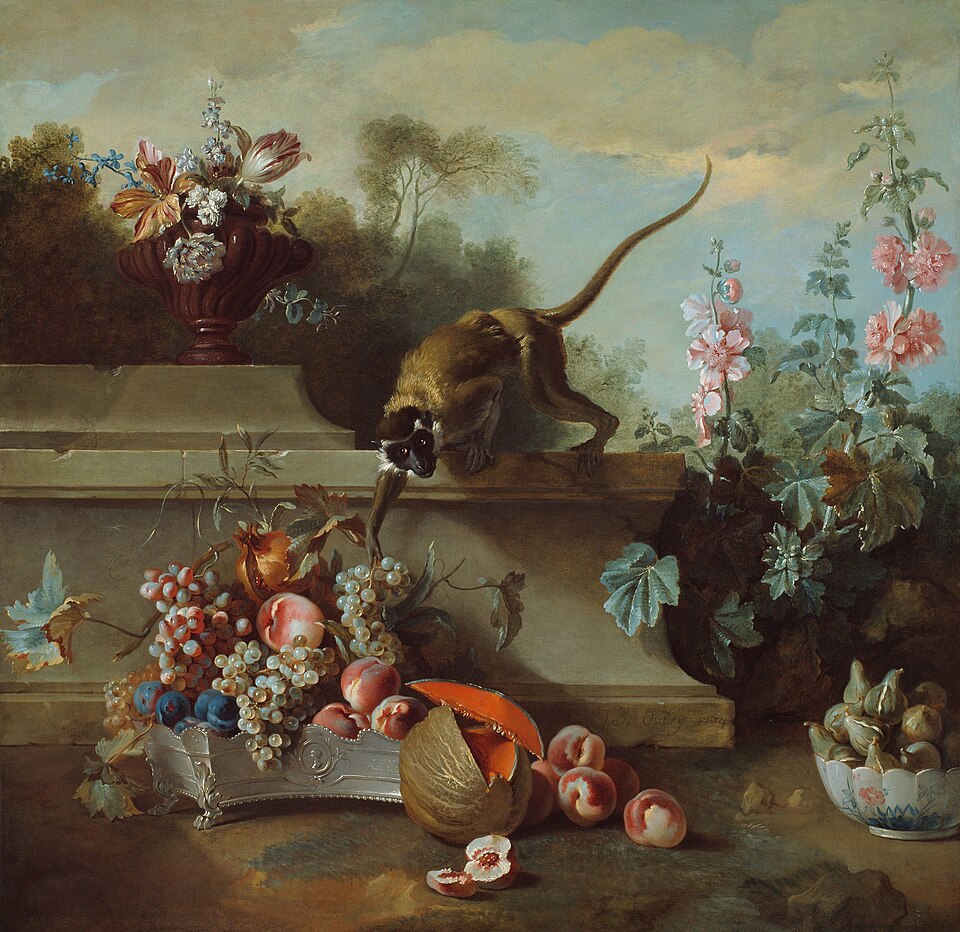
Painting: Jean-Baptiste Oudry, Still Life with Monkey, Fruits, and Flowers, 1724 · Art Institute of Chicago
A pinacotheca (Ancient Greek: pinakothēkē ) was a dedicated repository for the display of paintings.
Five paintings a day. When were they made, and what are you really looking at?
◆How to play
Five paintings a day, and a fresh set unlocks every day at midday, in your own timezone.
Read it. Answer what's really going on in the picture. Right, 1,000. Wrong, nothing.
Date it. Then slide to the year you think it was painted. The closer you land, the more you score, up to 1,000.
Two thousand a painting; ten thousand for a flawless day. Almost no one gets ten thousand.
Each painting becomes one coloured square, so your day reads at a glance: green when you nail it, cooling through blue and purple to dark the further off you land.
●Creative Commons Zero (CC0)
Every painting here is in the public domain, and every image is shared by a museum under an open licence (Creative Commons Zero, CC0) that places no restrictions on reuse. Paintings, images, and catalogue data are drawn from these open collections, with gratitude:
- National Gallery of Art, Washington: Open Access images & Public Domain Collection Dataset, CC0.
nga.gov/open-access-images - The Art Institute of Chicago: public-domain artworks & open API data, CC0.
api.artic.edu - The Metropolitan Museum of Art, New York: Open Access works & dataset, CC0.
metmuseum.org/open-access
Each painting links to its source record at the museum that holds it. We credit these institutions by name; we don't use their logos, and nothing here implies their endorsement. Images are shown only where the holding museum marks the work public domain and the image CC0. If you represent one of these institutions and believe something appears in error, tell us at hello@pinacotechus.com and we'll remove it.
◑Interpretation of fact
Artwork details and links come straight from the museums. The plain-language notes were written with the help of AI (Claude), drawn from general art-historical knowledge. The source for each is linked on every card, so you can check our work. Each reveal shows how well-sourced its note is:
Each painting also carries a short note on what was happening in the world around it, drawn from a real event from the same place and time, with its source linked.
◆What's here, and what isn't
Art forms
A pinacotheca (or pinacoteca) was a room for painted panels and easel art. This gallery, too, is only paintings. For the wider sweep of human making (objects, scrolls, and pictures from across the world), go to Anthropeum, the daily game that inspired this one.
Global & historical breadth
Pinacotechus draws on a handful of museums' open-access collections, which today lean heavily toward European painting.
The timeline stops in the early twentieth century because more recent art is still under copyright. The cut-off is a feature of doing this honestly, not a gap.
That's a real limitation, not the whole of art history. Broadening it is careful work: including only what can be both shown compliantly and read with respectful curiosity.
◐Privacy
Pinacotechus is free to play and never asks you to sign in or hand over any personal details.
Your scores and the days you've played are saved on your own device, in your browser, so the game can remember them between visits. They never leave your device, and clearing your browser data removes them.
To count visits we use Cloudflare Web Analytics, which is privacy-first and cookieless. It sets nothing on your device and collects no personal information; it just tells us roughly how many people come and which pages they open. We show no advertising and never sell anything.
Questions? Write to hello@pinacotechus.com.
Inspired by Anthropeum, the daily game of dating objects from the Met's open collection.
Made by Vanessa, one Saturday afternoon in lieu of getting through her to-do list. Doesn't know much about art history but is accomplished at finding creative ways to procrastinate.